
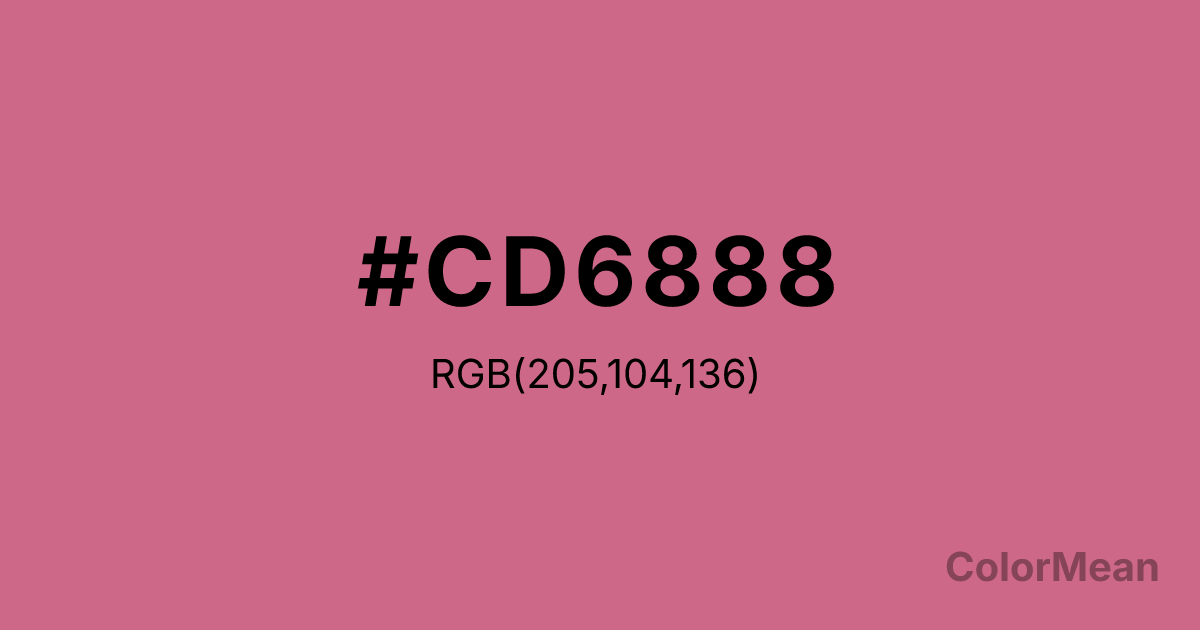
#CD6888 Color Information
#CD6888 RGB value is (205, 104, 136). The hex color red value is 205, green is 104, and blue is 136. Its HSL format shows a hue of 341°, saturation of 50 percent, and lightness of 61 percent. The CMYK process values are 0 percent, 49 percent, 34 percent, 20 percent.
#CD6888 Color Meaning
Color #CD6888 suggests deeper emotional resonance, a more subdued and substantial expression of compassionate feeling. #CD6888 muted, medium pink-red-violet evokes dried roses or weathered velvet, indicating sentiment that is enduring, reflective, and somewhat nostalgic. Psychologically, PaleVioletRed3 (#CD6888) is grounding and emotionally rich, fostering a sense of deep care, respectful empathy, and romantic memory. #CD6888 feels less immediate and more thoughtful than the brighter variants, offering comfort that comes from depth rather than novelty. #CD6888 color speaks of love that has roots. Culturally, PaleVioletRed3 (#CD6888) appears in more traditional or formal designs where warmth needs to be conveyed with dignity and restraint, such as in certain heritage brands or academic contexts related to caregiving. Symbolically, #CD6888 represents compassionate wisdom, enduring affection, and the heart's quiet memory. In its web color series, PaleVioletRed3 (#CD6888) provides crucial mid-range depth, allowing designers to create shaded, dimensional emotional landscapes with precision and consistency.
Color Conversion
Convert #CD6888 across different color models and formats. These conversions help designers work seamlessly between digital and print media, ensuring this color maintains its intended appearance across RGB screens, CMYK printers, and HSL color manipulations.
RGB Values & CMYK Values
RGB Values
CMYK Values
Color Variations
#CD6888 harmonies come to life through carefully balanced shades, tints, and tones, giving this color depth and flexibility across light and dark variations. Shades add richness, tints bring an airy softness, and tones soften intensity, making it easy to pair in clean, modern palettes.
Color Harmonies
#CD6888 harmonies create beautiful relationships with other colors based on their position on the color wheel. Each harmony type offers unique design possibilities, enabling cohesive and visually appealing color schemes.
Analogous
Colors adjacent on the color wheel (30° apart)
Complementary
Colors opposite on the color wheel (180° apart)
Split Complementary
Three colors using one base hue and the two hues beside its opposite
Triadic
Three colors evenly spaced (120° apart)
Tetradic
Four colors forming a rectangle on the wheel
Square
Four colors evenly spaced (90° apart)
Double Split
Four colors formed from two base hues and the colors next to their opposites
Monochromatic
Variations of a single hue
Contrast Checker
(WCAG 2.1) Test #CD6888 for accessibility compliance against white and black backgrounds. Proper contrast ensures this color remains readable and usable for all audiences, meeting WCAG 2.1 standards for both normal and large text applications.
Sample Text
This is how your text will look with these colors.
Large Text (18pt+)
Normal Text
UI Components
Color Blindness Simulator
See how #CD6888 appears to people with different types of color vision deficiencies. These simulations help create more inclusive designs that consider how this color is perceived across various visual abilities.
Normal Vision
protanopia
Note: These simulations are approximations. Actual color vision deficiency varies by individual.
CSS Examples
Background Color
Text Color
Sample Text
Border Color
Box Shadow
Text Shadow
Sample Text
Gradient
#CD6888 Color FAQs
Frequently asked questions about #CD6888 color meaning, symbolism, and applications. Click on any question to expand detailed answers.