
#FBCCDA Color Information
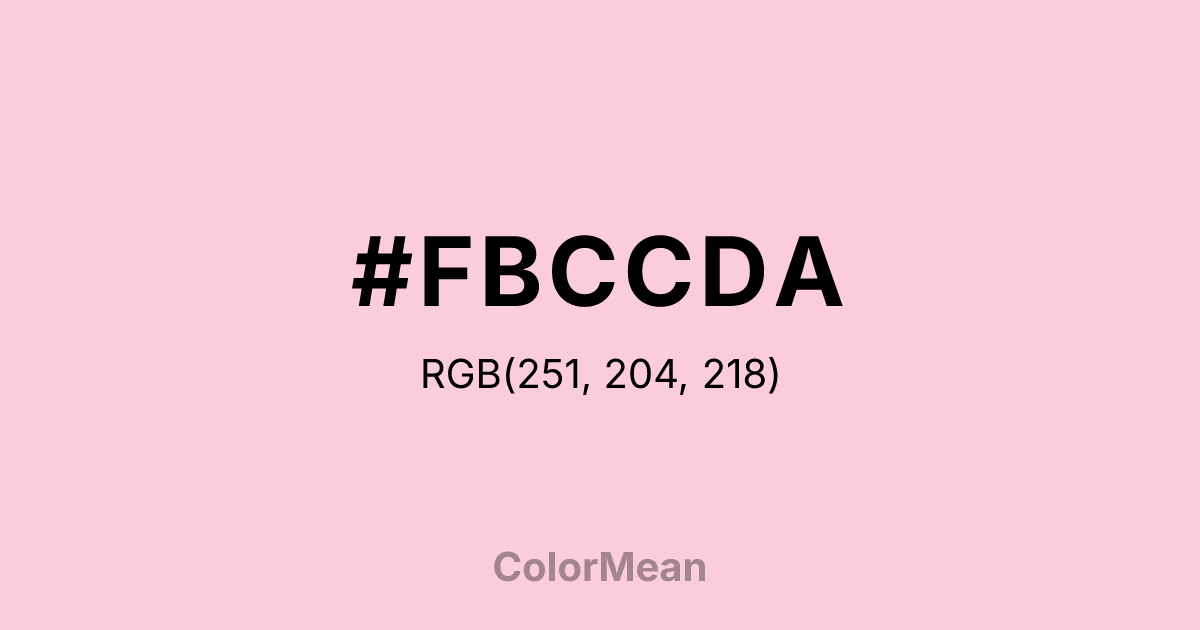
#FBCCDA RGB value is (251, 204, 218). The hex color red value is 251, green is 204, and blue is 218. Its HSL format shows a hue of 342°, saturation of 85 percent, and lightness of 89 percent. The CMYK process values are 0 percent, 19 percent, 13 percent, 2 percent.
#FBCCDA Color Meaning
Color #FBCCDA projects sugary sweetness, innocent joy, and universal affection. #FBCCDA light, cool-toned pink is the quintessential "baby pink," evoking cotton candy, bubblegum, and sheer optimism. Psychologically, color #FBCCDA is nurturing and emotionally pacifying, reducing feelings of aggression and promoting a sense of harmless, playful love. #FBCCDA creates a perceived environment of safety, innocence, and carefree happiness, often used to denote youth, sweetness, and approachable charm. #FBCCDA color is fundamentally friendly and undemanding. Culturally, color #FBCCDA is iconic in confectionery, children's products, and Valentine's Day imagery, serving as a universal shorthand for cute, sweet, and kind. Symbolically, #FBCCDA represents uncomplicated love, naive hope, and a worldview that is gentle and trusting. Spiritually, color #FBCCDA connects to the heart chakra in its most open and unprotected state, encouraging compassion, forgiveness, and a simple, joyful engagement with the present moment.
Color Conversion
Convert #FBCCDA across different color models and formats. These conversions help designers work seamlessly between digital and print media, ensuring this color maintains its intended appearance across RGB screens, CMYK printers, and HSL color manipulations.
RGB Values & CMYK Values
RGB Values
CMYK Values
Color Variations
#FBCCDA harmonies come to life through carefully balanced shades, tints, and tones, giving this color depth and flexibility across light and dark variations. Shades add richness, tints bring an airy softness, and tones soften intensity, making it easy to pair in clean, modern palettes.
Color Harmonies
#FBCCDA harmonies create beautiful relationships with other colors based on their position on the color wheel. Each harmony type offers unique design possibilities, enabling cohesive and visually appealing color schemes.
Analogous
Colors adjacent on the color wheel (30° apart)
Complementary
Colors opposite on the color wheel (180° apart)
Split Complementary
Three colors using one base hue and the two hues beside its opposite
Triadic
Three colors evenly spaced (120° apart)
Tetradic
Four colors forming a rectangle on the wheel
Square
Four colors evenly spaced (90° apart)
Double Split
Four colors formed from two base hues and the colors next to their opposites
Monochromatic
Variations of a single hue
Contrast Checker
(WCAG 2.1) Test #FBCCDA for accessibility compliance against white and black backgrounds. Proper contrast ensures this color remains readable and usable for all audiences, meeting WCAG 2.1 standards for both normal and large text applications.
Sample Text
This is how your text will look with these colors.
Large Text (18pt+)
Normal Text
UI Components
Color Blindness Simulator
See how #FBCCDA appears to people with different types of color vision deficiencies. These simulations help create more inclusive designs that consider how this color is perceived across various visual abilities.
Normal Vision
protanopia
Note: These simulations are approximations. Actual color vision deficiency varies by individual.
CSS Examples
Background Color
Text Color
Sample Text
Border Color
Box Shadow
Text Shadow
Sample Text
Gradient
#FBCCDA Color FAQs
Frequently asked questions about #FBCCDA color meaning, symbolism, and applications. Click on any question to expand detailed answers.