
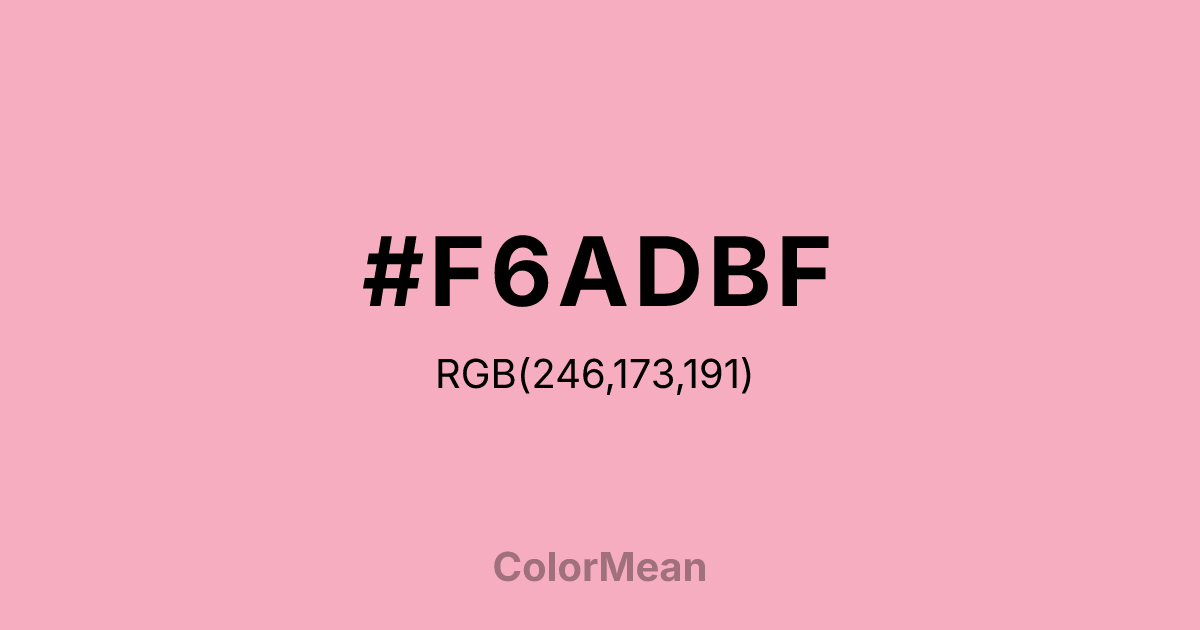
#F6ADBF Color Information
#F6ADBF RGB value is (246, 173, 191). The hex color red value is 246, green is 173, and blue is 191. Its HSL format shows a hue of 345°, saturation of 80 percent, and lightness of 82 percent. The CMYK process values are 0 percent, 30 percent, 22 percent, 4 percent.

#F6ADBF Color Meaning
Color #F6ADBF evokes gentle resilience, soft assertiveness, and quiet cultural pride. Color #F6ADBF draws its name from the Dianthus flower, a symbol of ideal femininity in Japanese tradition that balances grace with inner strength. Unlike saccharine pinks, #F6ADBF muted rose carries a grounded delicacy—airy but not fragile, romantic but not passive. Historically, #F6ADBF reflects the Edo-period aesthetic of iki, a refined understatement that values subtlety over spectacle. Psychologically, color #F6ADBF calms without infantilizing. Studies in color psychology suggest that soft pinks reduce aggression and foster emotional safety, particularly in high-stress environments. #F6ADBF shade avoids the overstimulation of brighter pinks while retaining warmth, making #F6ADBF effective in healthcare, education, and inclusive branding. Its low saturation supports focus without emotional suppression—ideal for spaces where empathy and clarity must coexist. Culturally, color #F6ADBF bridges East Asian heritage and global minimalism. #F6ADBF appears in contemporary Japanese fashion, ceramics, and even national sports branding (e.g., Japan’s women’s soccer team, nicknamed “Nadeshiko Japan”). Outside Japan, #F6ADBF resonates with movements toward mindful femininity—rejecting pink as purely decorative and reclaiming #F6ADBF as a hue of quiet confidence. Designers use #F6ADBF to signal approachability without compromising sophistication. Symbolically, color #F6ADBF represents endurance wrapped in softness. #F6ADBF is the color of petals that survive wind, of voices that speak gently but persistently. In branding or spatial design, #F6ADBF communicates care without condescension and strength without sharpness. #F6ADBF’s not the pink of cliché—#F6ADBF’s the pink of considered presence.
Color Conversion
Convert #F6ADBF across different color models and formats. These conversions help designers work seamlessly between digital and print media, ensuring this color maintains its intended appearance across RGB screens, CMYK printers, and HSL color manipulations.
RGB Values & CMYK Values
RGB Values
CMYK Values
Color Variations
#F6ADBF harmonies come to life through carefully balanced shades, tints, and tones, giving this color depth and flexibility across light and dark variations. Shades add richness, tints bring an airy softness, and tones soften intensity, making it easy to pair in clean, modern palettes.
Color Harmonies
#F6ADBF harmonies create beautiful relationships with other colors based on their position on the color wheel. Each harmony type offers unique design possibilities, enabling cohesive and visually appealing color schemes.
Analogous
Colors adjacent on the color wheel (30° apart)
Complementary
Colors opposite on the color wheel (180° apart)
Split Complementary
Three colors using one base hue and the two hues beside its opposite
Triadic
Three colors evenly spaced (120° apart)
Tetradic
Four colors forming a rectangle on the wheel
Square
Four colors evenly spaced (90° apart)
Double Split
Four colors formed from two base hues and the colors next to their opposites
Monochromatic
Variations of a single hue
Contrast Checker
(WCAG 2.1) Test #F6ADBF for accessibility compliance against white and black backgrounds. Proper contrast ensures this color remains readable and usable for all audiences, meeting WCAG 2.1 standards for both normal and large text applications.
Sample Text
This is how your text will look with these colors.
Large Text (18pt+)
Normal Text
UI Components
Color Blindness Simulator
See how #F6ADBF appears to people with different types of color vision deficiencies. These simulations help create more inclusive designs that consider how this color is perceived across various visual abilities.
Normal Vision
protanopia
Note: These simulations are approximations. Actual color vision deficiency varies by individual.
CSS Examples
Background Color
Text Color
Sample Text
Border Color
Box Shadow
Text Shadow
Sample Text
Gradient
#F6ADBF Color FAQs
Frequently asked questions about #F6ADBF color meaning, symbolism, and applications. Click on any question to expand detailed answers.