How to use the color orange
The usage of orange spans practical, aesthetic, and symbolic domains. When applied with intention, it enhances communication, boosts engagement, and adds emotional depth. Below are key applications across industries and daily life.
1) Color orange in business
Orange conveys approachability and innovation. Consequently, it is ideal for startups and tech firms. It helps service-based businesses stand out without intimidating.
Companies like Fanta and Nickelodeon use orange to signal fun and accessibility. In offices, muted orange accents can stimulate collaboration. Research in environmental psychology suggests such colors can reduce mental fatigue during long meetings.
2) Color orange in branding and marketing
Marketers leverage orange to drive action. For example, call-to-action buttons in e-commerce perform better in orange than in gray or blue. This is because the color creates urgency without aggression.
Discount retailers like Home Depot use orange to imply value and friendliness. However, luxury brands often avoid saturated orange as it reads as affordable, not exclusive. For premium positioning, designers opt for deep rust or amber tones instead.
3) Color orange in interior design
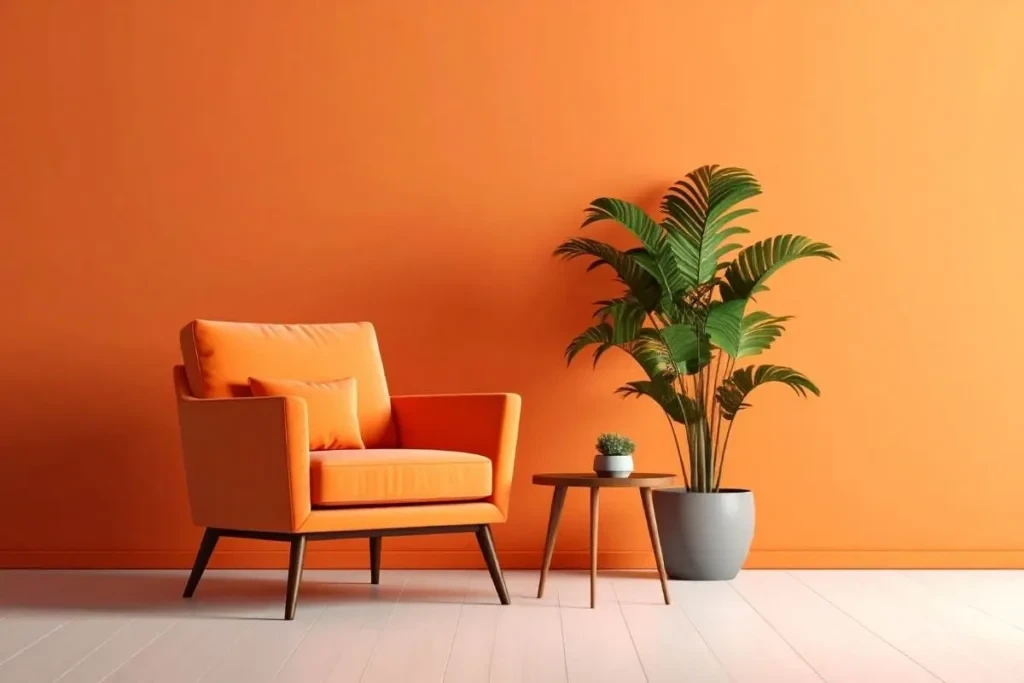
In homes, orange works best as an accent color. A burnt orange throw pillow or a terracotta vase adds warmth to neutral spaces.
Kitchens and dining rooms benefit most since orange can stimulate appetite and conversation. In bedrooms, soft peach tones promote comfort without overstimulation. Feng Shui recommends orange in the south area of a room to activate fame and reputation energy.
4) Orange color in cinema
Filmmakers use orange to convey transition or emotional intensity. In Her (2013), orange light reflects the protagonist’s longing. Amélie (2001) uses warm orange palettes to create whimsy and nostalgia.
Action films often tint explosion scenes in orange to heighten realism. Orange also appears in “golden hour” cinematography to signal fleeting beauty or memory.
5) Orange color In humans
Human skin tones span the orange spectrum. Makeup artists use orange-based correctors to neutralize dark circles because orange cancels blue.
In health, a slight orange tint in skin can indicate excess beta-carotene, which is harmless. Conversely, jaundice produces a yellow-orange cast signaling liver issues. Culturally, orange skin from sunless tanners has symbolized leisure and vitality.
6) Orange color in makeup
Orange tones dominate seasonal makeup lines. They flatter nearly all skin tones when properly balanced. Warm undertones shine with true orange lipsticks. Cool undertones suit muted brick shades.
Orange eyeliner adds playful drama without the harshness of black. However, over-application can look theatrical, so precision matters.
These applications prove that orange is never just decorative. It communicates, activates, and connects.
7) Orange food
Orange foods are vibrant and nutritionally powerful. Carrots, sweet potatoes, and mangoes owe their hue to beta-carotene. This is a precursor to vitamin A, essential for vision and immunity.
Chefs use orange ingredients to add visual pop and natural sweetness. Culturally, orange foods dominate autumn menus worldwide, symbolizing abundance.
8) Orange color in quotes and idioms
Language reflects orange’s dual nature. For example, the phrase “orange alert” stems from the U.S. Homeland Security scale. The phrase “bleed orange” is used by university fans to express fierce loyalty.
Though fewer idioms feature orange than red or blue, its presence often signals visibility or urgency.
9) Orange color in art and architecture
Artists have long exploited orange’s emotional range. Van Gogh’s Sunflowers pulses with life through layered chrome orange.
In architecture, orange brick defines historic districts in cities like Boston. Modern designers incorporate terracotta tiles or amber glass to add warmth. The Getty Center uses travertine stone with orange undertones to harmonize with sunlight.
10) Songs with orange in the title
Music embraces orange as a metaphor. Notable tracks include:
- “Orange Colored Sky” by Nat King Cole—a jazz standard about love striking like lightning.
- “Orange Juice” by Rex Orange County—blending melancholy and hope.
- “Orange” by Al Stewart—evoking 1960s counterculture.
These songs use orange to signify surprise, warmth, or nostalgia.
11) Cities with color names: Orange
Several towns bear the name “Orange.”
- Orange, California, is a historic citrus hub.
- Orange, New South Wales, celebrates with an annual Orange Wine Festival.
- In France, Orange boasts a Roman theater that glows amber at sunset.
Each ties the color to land, light, and legacy.
12) The color orange in the garden
Gardens burst with orange in late summer and fall. Marigolds repel pests while attracting pollinators. Tiger lilies command attention with speckled petals. Even foliage turns orange, with maples creating fiery canopies.
Gardeners use orange blooms to bridge red and yellow beds seamlessly. Beyond beauty, orange plants support ecosystems. For instance, monarch butterflies rely on orange milkweed for survival.