
#F0DC8C Color Information
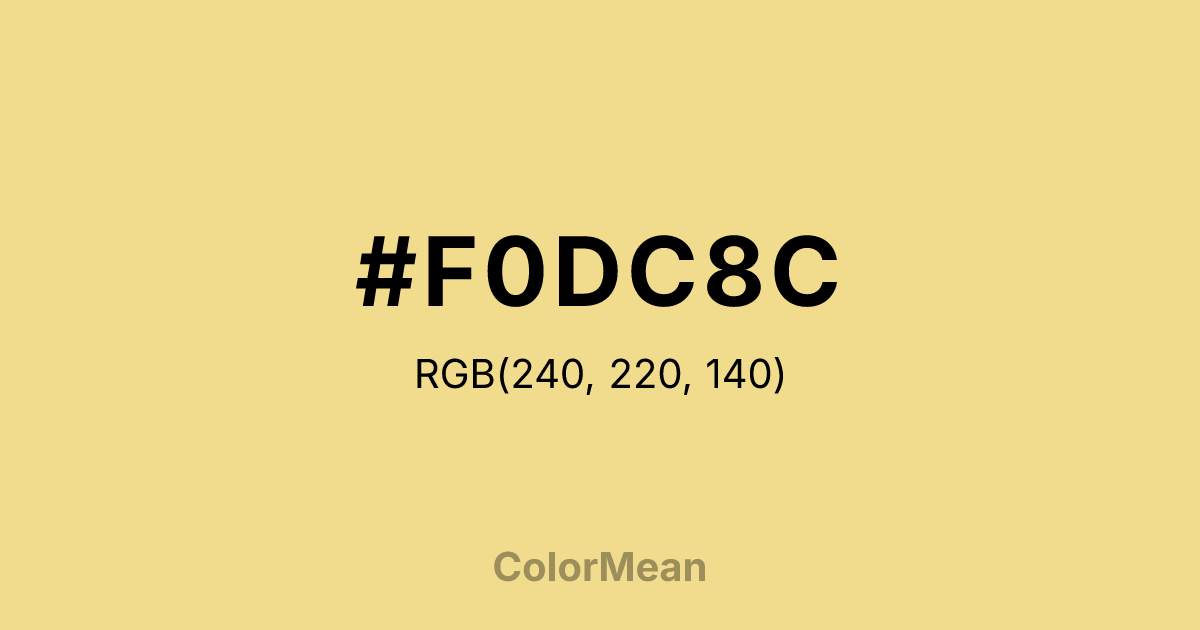
#F0DC8C RGB value is (240, 220, 140). The hex color red value is 240, green is 220, and blue is 140. Its HSL format shows a hue of 48°, saturation of 77 percent, and lightness of 75 percent. The CMYK process values are 0 percent, 8 percent, 42 percent, 6 percent.
#F0DC8C Color Meaning
Color #F0DC8C radiates golden comfort, accessible richness, and edible softness. Color #F0DC8C is a warm, luminous yellow that mirrors the dessert—creamy, slightly golden, and universally comforting. Unlike lemon yellow, #F0DC8C carries sweetness; unlike gold, #F0DC8C feels approachable. In food and hospitality branding, #F0DC8C hue signals indulgence without excess, common in bakeries, dessert cafes, and seasonal campaigns. Psychological studies show #F0DC8C increases perceived sweetness and warmth in product claims, especially in dairy and confectionery contexts. Functionally, color #F0DC8C works best as an accent in digital and packaging design. #F0DC8C’s common in limited-edition labels, menu highlights, and social media graphics where emotional uplift matters. However, accessibility guidelines require careful pairing—#F0DC8C fails contrast on white and must be used with deep browns or navies. Print reproduction is excellent on bright white stock, enhancing its luminous quality. A/B tests confirm higher purchase intent when color #F0DC8C replaces standard yellow in food contexts. Culturally, color #F0DC8C reflects joy that nurtures—family recipes, holiday desserts, slow afternoons. #F0DC8C appears in nostalgic branding, community baking, and comfort food as a symbol of care made tangible. Spiritually, #F0DC8C aligns with the sacral chakra’s nourishing mode: creativity that satisfies. Designers use color #F0DC8C when they want to signal richness with generosity. Its warmth is shared, not hoarded.
Color Conversion
Convert #F0DC8C across different color models and formats. These conversions help designers work seamlessly between digital and print media, ensuring this color maintains its intended appearance across RGB screens, CMYK printers, and HSL color manipulations.
RGB Values & CMYK Values
RGB Values
CMYK Values
Color Variations
#F0DC8C harmonies come to life through carefully balanced shades, tints, and tones, giving this color depth and flexibility across light and dark variations. Shades add richness, tints bring an airy softness, and tones soften intensity, making it easy to pair in clean, modern palettes.
Color Harmonies
#F0DC8C harmonies create beautiful relationships with other colors based on their position on the color wheel. Each harmony type offers unique design possibilities, enabling cohesive and visually appealing color schemes.
Analogous
Colors adjacent on the color wheel (30° apart)
Complementary
Colors opposite on the color wheel (180° apart)
Split Complementary
Three colors using one base hue and the two hues beside its opposite
Triadic
Three colors evenly spaced (120° apart)
Tetradic
Four colors forming a rectangle on the wheel
Square
Four colors evenly spaced (90° apart)
Double Split
Four colors formed from two base hues and the colors next to their opposites
Monochromatic
Variations of a single hue
Contrast Checker
(WCAG 2.1) Test #F0DC8C for accessibility compliance against white and black backgrounds. Proper contrast ensures this color remains readable and usable for all audiences, meeting WCAG 2.1 standards for both normal and large text applications.
Sample Text
This is how your text will look with these colors.
Large Text (18pt+)
Normal Text
UI Components
Color Blindness Simulator
See how #F0DC8C appears to people with different types of color vision deficiencies. These simulations help create more inclusive designs that consider how this color is perceived across various visual abilities.
Normal Vision
protanopia
Note: These simulations are approximations. Actual color vision deficiency varies by individual.
CSS Examples
Background Color
Text Color
Sample Text
Border Color
Box Shadow
Text Shadow
Sample Text
Gradient
#F0DC8C Color FAQs
Frequently asked questions about #F0DC8C color meaning, symbolism, and applications. Click on any question to expand detailed answers.